About the finite nature of human kind
Do the changes to our environment lead us to become aware of our limits as human beings?
Cyrille Ozanne
10/30/20252 min read
Observations on the Paleolithic mindset—namely the finite‑infinite contradiction of our world—can be applied in another way.
Infinite in the horizon of its life, a Paleolithic person could always imagine “elsewhere.” Limited, because at any given place resources had to be arduously sought. That situation has been reversed today. Resources seem to flow without limit for our Western civilizations, while the horizon is increasingly narrowed by the development of communications that allow us to conceive of a “global village,” as the familiar expression puts it.
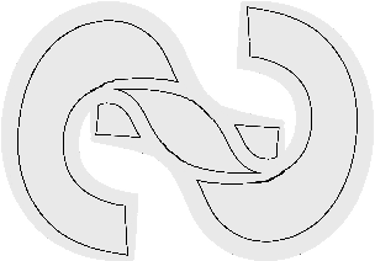
But this false perception of an infinite reality is not confined to means of communication and action in general. Reality itself is finite. The entire world can be traversed in less than a 24‑hour flight; two centuries ago the “horse day” was the benchmark for defining the chief town of a French department. In other domains—such as representations of the universe—images that replace the infinite (the torus or the sphere) have a solid place. They embody perfectly the concept of limited infinity: configurations in which we can circulate endlessly without meeting a boundary, yet we remain inside a space that is itself limited.
This notion of limited infinity does not belong solely to physics. We can observe, for example, that certain animal mutations recur over time. Likewise, ecosystems draw part of their resilience from redundancy—a mechanism also present in genetics. It is as if nature repeatedly employs the same solutions, the ones most suited to the situation, both macro‑ and microscopically.
By extension, we may ask whether the human being is still unlimited. He is limited in physical capacities—strength, lifespan. But what about the psychological realm? One definition of economics is “the confrontation of man’s infinite desires within a finite space.” Are those desires truly infinite? They are infinite in time: desire is linked to life and ceases only at death. Yet each individual desire is infinite only insofar as the person, beyond primary needs that renew themselves, continues to nurture it. A faucet can run perpetually, but the bottle is finite. Once a desire is satisfied, the mind moves on. Only the desires that are maintained—and those that shape identity—renew themselves. Some even become fundamental to a person’s sense of self. Thus the concept of limited infinity can also apply to the human being.
Why do we keep feeding them? It may be a vain attempt to sustain a feeling of omnipotence. That intoxicating feeling can become addictive and reassuring, both individually and collectively. Perhaps we should accept this limitation—if not personally, at least collectively—and cease forever wanting and hoping for more. This sense of total power, however human, does not correspond to reality.
The comments section will be added soon. Until then, feel free to post your comments here.
Proofread and edited with the assistance of AI.